
The worst part of my bike ride to work in Tel Aviv used to be crossing the bridge over Ayalon Highway - it’s the busiest intersection in the country. Biking through the crowds, buses and cars doing illegal drop offs would take me more time than the two mile bike ride to get there, not to mention the stress and the direct hot Israeli sun.
I’ve since lived in San Francisco for almost nine years, and recently moved back to Tel Aviv. Luckily for me, a fancy new pedestrian bridge was built over the highway - the Yehudit bridge took 2.5 years to build and required a $20M investment. Look how nice it is - there is even shade to protect from the sun.
Oh, just one problem though - the bike path on the bridge doesn’t match the street on the other side.
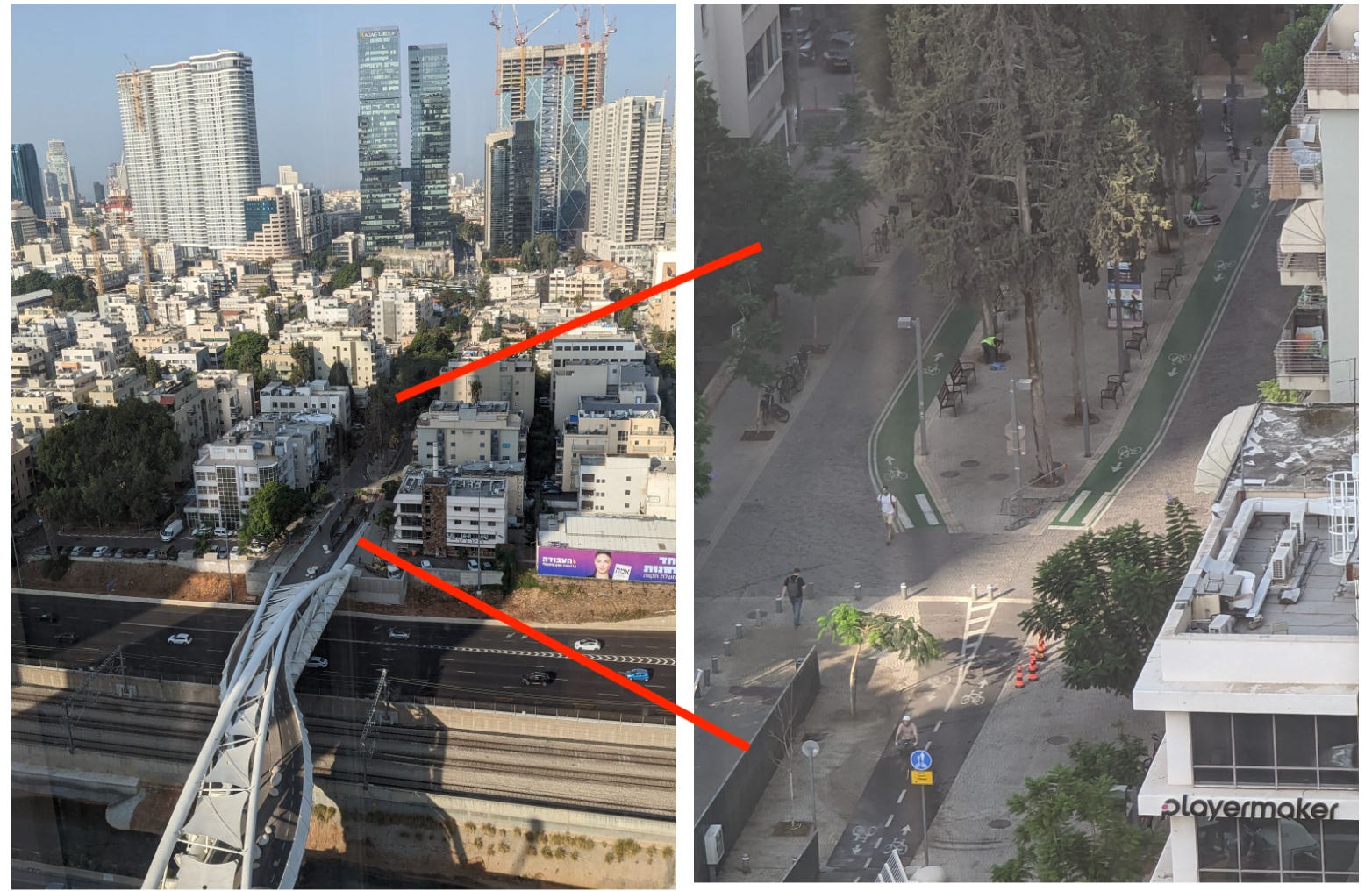
I find it very typical Israeli: it seems impossible to live like this from outside, but Tel Aviv bikers just make it work somehow. Yotam Gutman wrote in his blog after coming back to Israel from a trip to Europe:
Immediately after the trip I hosted a group of colleagues, who were visiting our Tel Aviv office from abroad. They wondered about the traffic, the construction, and the dirt everywhere, and I apologized that the city is going through a major reconstruction, that is meant to upgrade its transportation infrastructure. They asked when it would end and I honestly answered ‘never’ - Tel Aviv is always in the process of demolition and rebuilding.
The gap between the “tradition” in Europe and the never ending construction in Israel is impossible to grasp, and so is the difference between our hectic lifestyle and their laid back one.
He claims that this is what makes Israelis build so many startups: their lives are never comfortable, so they constantly have to innovate.
The Startup Nation book told the story of how Israeli startup Fraud Sciences was acquired. PayPal’s CTO at the time, Scott Thompson, was asked by a VC to help with due diligence, and thought that the Fraud Sciences approach for detecting fraudsters online was out of touch. Thompson gave them a challenge that required large scale data processing, and thought that would get these funny folks off his back for a few months. The Fraud Sciences team completed the analysis over a single weekend, and had far better results than PayPal’s internal risk model!
Fraud Sciences just figured out how to work around this seemingly impossible challenge. PayPal’s CTO was so impressed, that instead of an investment - he pushed for PayPal to acquire them.
Ilya Kogan posts videos about urbanism in Israel on his “Livable City” YouTube channel. In one of them he mentions that the last time he was able to take a leisurely walk on the street, relax and let his mind travel was when he was on a trip to Europe. In Tel Aviv there are e-scooters, e-bike and sometimes actual motorcycles flying by on the narrow sidewalks. You always have to be alert. One must exercise problem solving skills just to walk down the street in Tel Aviv.
Israelis are not great at long term planning, it’s mostly haphazard and short sighted. You can feel it driving on the highway, when suddenly the lanes can shift 10 inches to the left with no warning. The upside is that it keeps everyone on their toes, they’re constantly sharpening their creativity and thinking out of the box.
This makes Israelis very well suited to solve different problems in the ever evolving world of technology - there was no “long term planning” for the internet or semiconductors. New problems just keep on rising as technology advances, which is exactly the type of environment where Israeli entrepreneurs can feel at home.
Monday.com is a publicly traded Israeli tech company that is currently worth $5B, but early 2014 they were at a critical junction: their funding was running out, and the product was hardly getting any traction. Founders Roy Mann and Eran Zinman were able to convince their investors to give them a little more runway, so they could try out a new product concept: no-code highly customizable boards. The result was strong product-market-fit and tremendous growth.
This is the ultimate Israeli entrepreneurial ethos: at the 11th hour, against all odds - a spark of creativity wins the game.
The lack of planning resulted in Tel Aviv buildings being, how should I put it, not as easy on the eye as buildings in cities like Paris or Amsterdam. The mortar is peeling off and there are ugly solar heaters and AC units hanging outside each apartment.
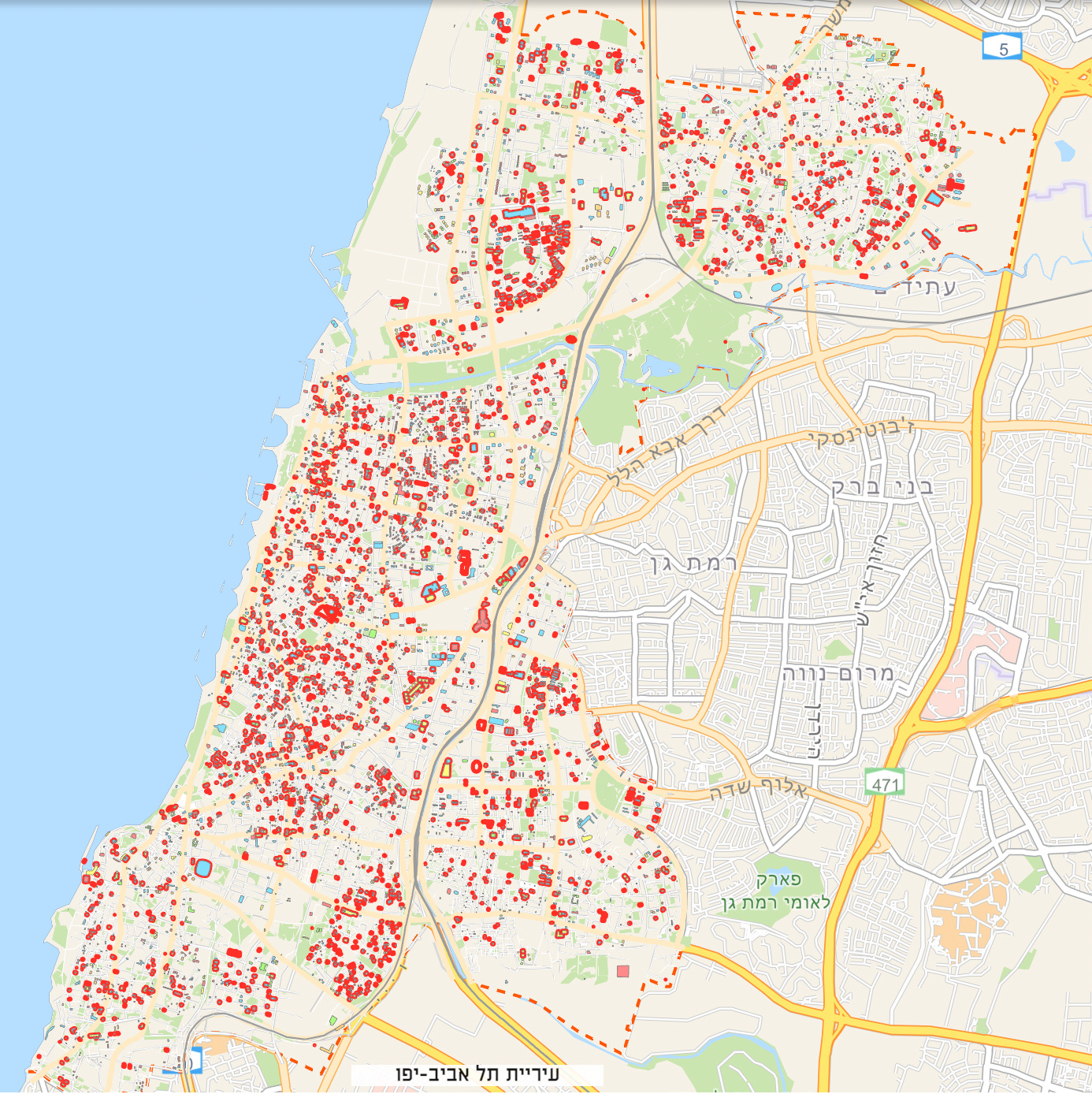
The flip side of that is that the city, unlike in Paris or Amsterdam, is encouraging reconstruction. Here is a map I pulled from the Tel Aviv city website, showing all buildings who have filed for construction permits. Construction sites are marked in red:
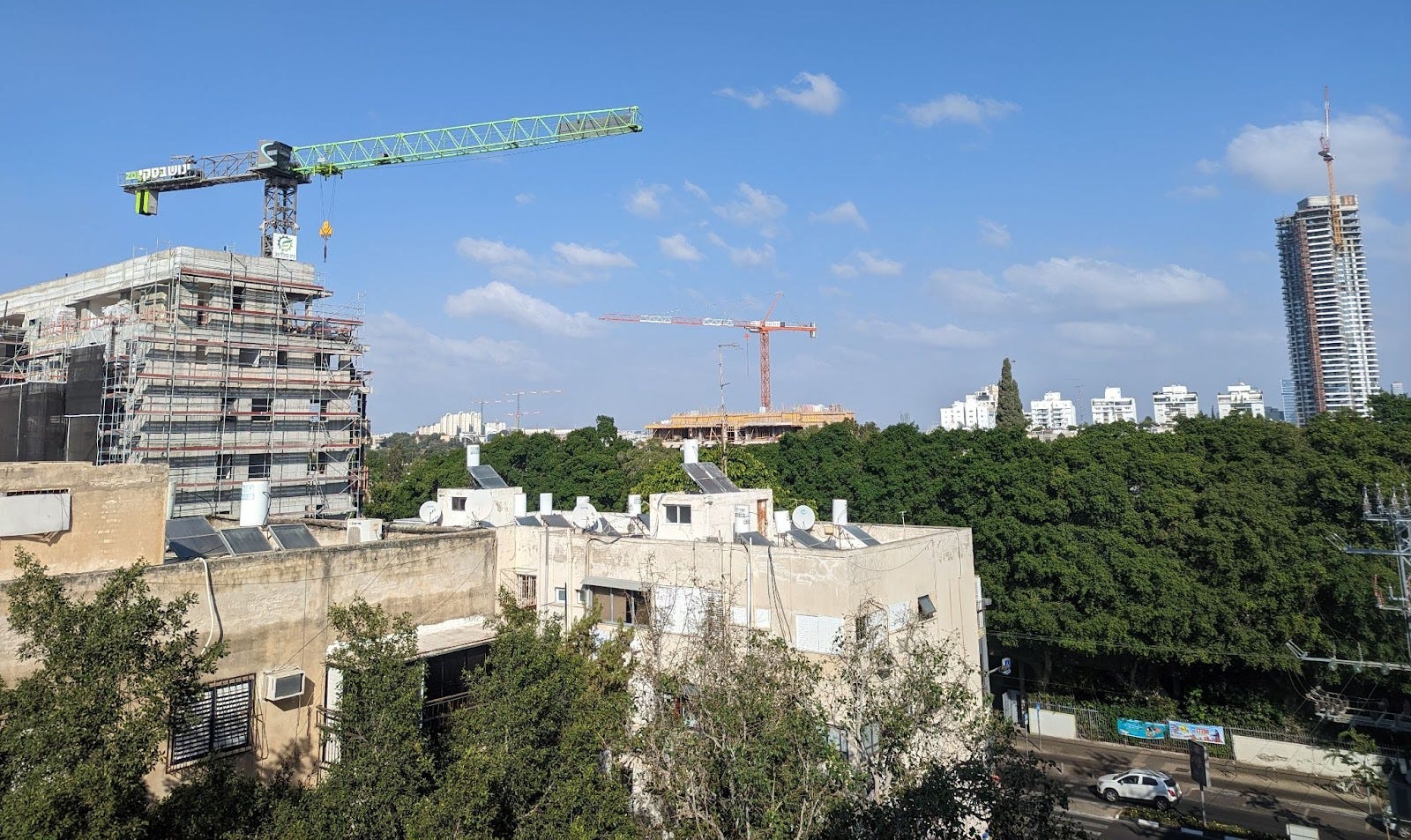
In conjunction with rebuilding almost every building in the city, the Tel Aviv subway project that was designed in the 1970’s has finally broken ground in 2016. Now you might get why Ilya Kogan was complaining about the scooters and e-bikes rampaging through the sidewalks - there is just no other way to get around in a city that is entirely under construction.
After being postponed several times, the building of the first subway line - “the red line” - has finally been completed. Ilya Kogan posted a very optismitc video about the wonderful impact of the red line on its surrounding areas. What’s sad is that just a few weeks before the grand opening, it was once again delayed to an unknown date in 2023. Everything is ready, but they found unexpected safety issues with the trains.
Of course there are last minute safety issues - it seems un-Israeli to properly manage a long milestone-based project, so major problems have to wait until the last minute in order to trigger the known Israeli creativity under stress.
The people of Tel Aviv have been waiting for a subway for 50 years now, they can wait a few months longer. It’s yet another opportunity for them to practice dealing with unexpected problems. And as for the Israeli engineers working on the safety issues - I’m sure they would solve them, no matter how complex they might be. Just like the bike riders on the Yehudit bridge don't get too worried about the confusing directions.
When you have to tackle hard challenges just to get to work in the morning, no wonder you won’t be intimidated by facing hard challenges at work.